Warmest layers
The winter kit
November to March
See the home flightGuides
Language
Currency
View availabilityfrom $259 · free to cancelChecklist to tick off
Grand Canyon helicopter tour
★ 4.7 · From 2,880 reviews
Checklist: 11 items
Tick items as you finish them. We save your progress on this device.
0 / 11 ready
All ticked. Choose your flight over the canyon, and the rest is settled.
Book a spotHow the extra seat rule works, where each listing draws its line, what applies to babies and children, and what to wear on a flight that starts from a high, cold rim.
Editorial team, grandcanyonhelicoptertour.quest · Updated November 24, 2026 · Allow 8 min
Main facts
The question behind the weight limit for Grand Canyon helicopter tours is practical, and it has nothing to do with judgment. A tour helicopter seats up to 6 passengers, and the pilot has to balance the load. Seats are allotted according to weight and balance limits, and several listings warn that a party may be seated apart for that reason. The rule about an extra seat comes from the same arithmetic, because a passenger who needs more room or more weight allowance occupies the place of a second passenger.
The home listing sets the line at 300 lbs: from that weight a passenger buys an extra seat, and the money is handed to the operator on the day of the tour. That means the second seat is not part of the fare you pay online, and it is not charged to every traveler. Ask the operator before the day if you are near the line, so the fare, the seat and the group seating can be settled at booking and not at the desk with a queue behind you.
The listings do not describe how weight is checked. They do say that seating is decided from weight and balance limits, and a Las Vegas listing says it is determined at check-in. If privacy worries you, call ahead and ask how the operator handles it; a polite question to the booking office will get a clear answer.
By listing
| Flight | Extra seat from | Under 2 | Check-in |
|---|---|---|---|
| Home South Rim flight | 300 lbs | Free, on a lap | See the listing |
| 45-minute South Rim flight | 275 lbs | On a lap with a birth certificate | 30 minutes before |
| 25-minute South Rim flight | 275 lbs | See the listing | 30 minutes before |
| Las Vegas landing tour | 300 pounds | Lap child with proof of age | 45 minutes before, self-drive |
| Las Vegas champagne landing | 300 lbs | See the listing | 45 minutes before |
| Las Vegas West Rim flight | Above 250 lbs | See the listing | 30 minutes before |
| Las Vegas air-only flight | 300 pounds | See the listing | 45 minutes before, self-drive |
Each figure is taken from the listing named in the row; operators set them and can change them, so check the listing again on the day you book.
The number is not the same everywhere, and that difference is the most useful figure to carry away. The South Rim flights of 45 minutes and 25 minutes both set the line at 275 lbs, with an extra seat required from that weight. The home listing and the Las Vegas landing tours set it at 300 lbs or more. The Las Vegas flight from a Strip-side heliport sets it lower, at passengers exceeding 250 lbs, or 112 kg.
The chart below sets the thresholds next to each other. Each bar is the weight from which the listing asks for an additional seat, so a traveler who is fine on a 300 lbs flight may still need to ask on the 250 lbs flight. Because operators set these figures, they can change, and the listing on the day you book is the one that counts.
Two cautions follow. First, the threshold is stated per listing, so flights on the same morning can differ, and a family booking different kinds of flight should check each. Second, the figure is a weight in pounds, with a metric figure given only on the West Rim listing, so travelers who think in kilograms should convert before they call.
The line, in pounds
Each bar is the weight from which the listing asks a passenger to buy an additional seat, in pounds.
The FAA's weight and balance circular explains the logic that sits behind passenger weights. It names 3 ways to set a passenger's weight: standard average weights, survey averages and actual weights.11 It adds that in a small cabin the average of the passengers on board can deviate further from the average of the whole population, so small and medium cabins deserve a closer look.12
A helicopter cabin is about as small as aircraft cabins get, and a few extra pounds on the wrong side matter more than on an airliner. The circular's standard weights add 5 pounds for summer clothing and 10 pounds for winter clothing to the body weights, and the summer season runs from May 1 to October 31 for that purpose.13,14 Clothing, in other words, is part of the arithmetic, and winter coats change the sum.
The circular also says that it would be unsafe, in the FAA's view, to use standard average weights in all turbine-powered single-engine aircraft.15 Which method a given operator uses is its own business and sits in its approved documents, so a passenger cannot read it off a booking page. What a passenger can use is the figure on the listing and a plain question to the desk.
Pick your case
Choose your case and see what to ask or pack.
If I weigh close to the line
Ask before booking
The line is 250 lbs, 275 lbs or 300 lbs depending on the flight, and the extra seat is paid to the operator.
If I am traveling with a baby
Bring proof of age
Under-2s travel on a lap, and a passport or a birth certificate copy shows their age.
If I have children from 2 years up
Count their seats
Children 2 years and older need a seat of their own on the 45-minute South Rim flight.
If I fly in winter
Pack the warmest kit
The village station records a January low of -7.5 °C.4
If I fly in July
Dress for the rim, not the river
Rim highs run in the 80s F while the river passes 100 degrees.7,8
If I use a wheelchair
Ask about the helipad steps
The West Rim shuttle takes wheelchairs, but boarding the aircraft is the operator's call.9
Dress kits
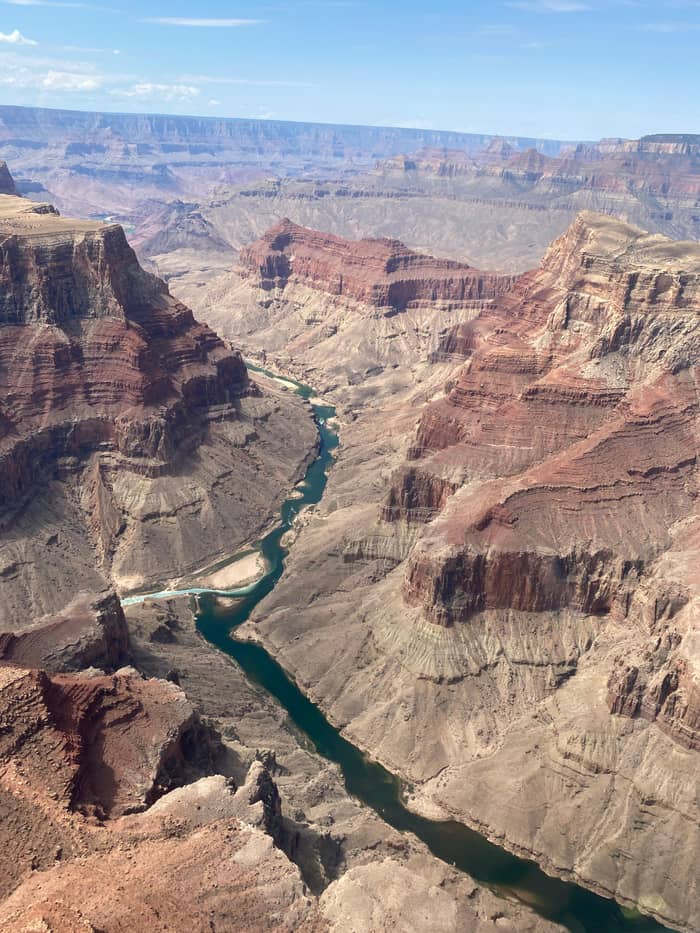
Warmest layers
November to March
See the home flight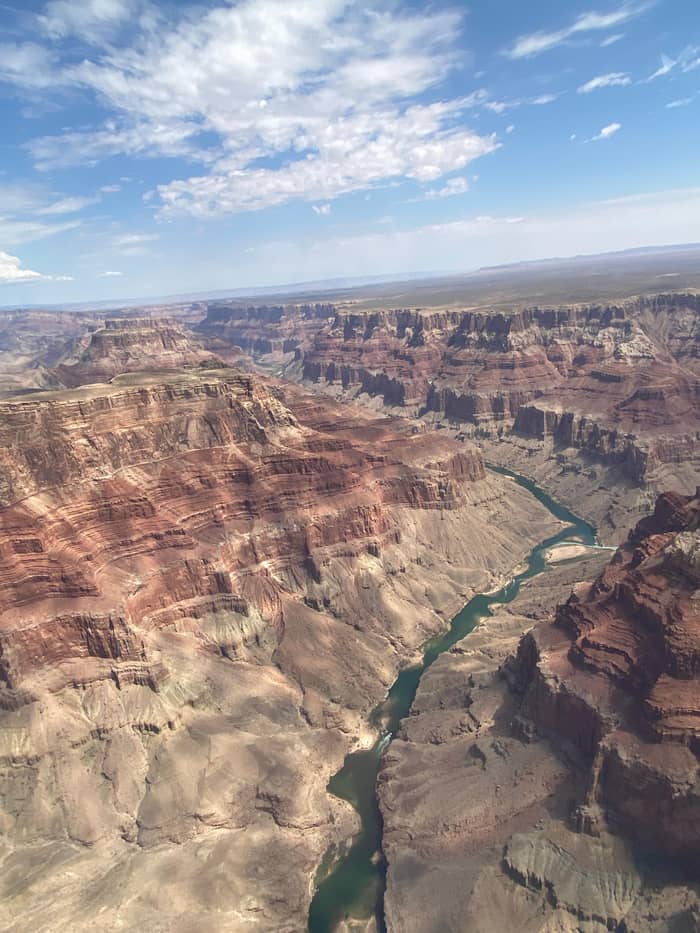
Flexible layers
April, May, September, October
See the home flight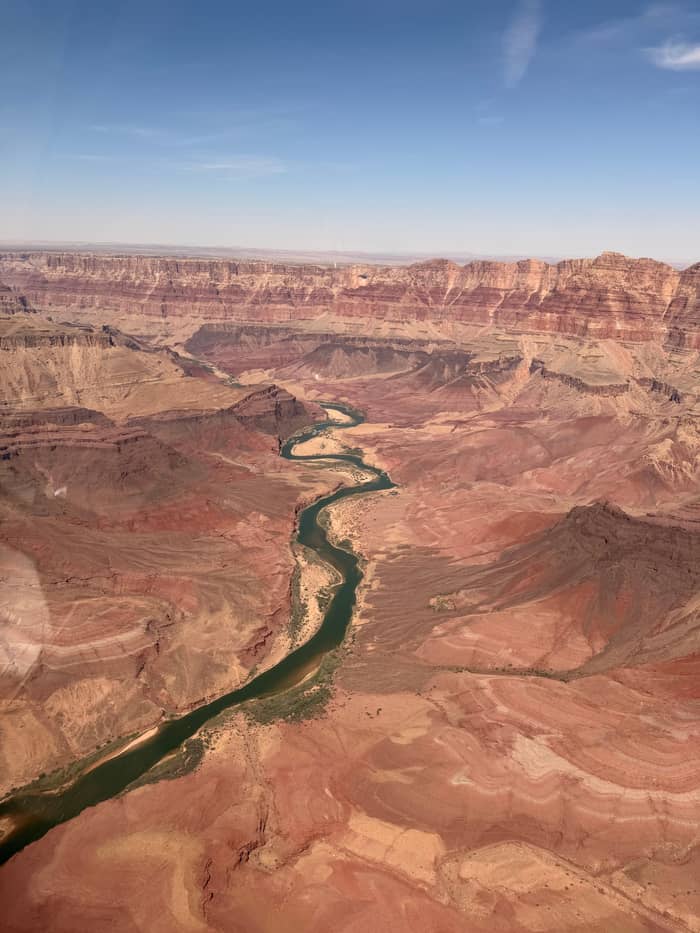
Light layers
June to August
See the home flightAge rules are simpler than weight rules, and they follow the federal belt rule. The federal belt rule lets an adult hold a child under 2 in an approved seat.16 The home listing applies this: infants under 2 are free, with a passport or a birth certificate copy as proof of age, and they sit on a parent's or guardian's lap.
From 2 years a child needs a seat of its own. The 45-minute South Rim flight says children 2 years and older need a seat, and younger ones may sit on an adult's lap with a birth certificate. If you are planning a Grand Canyon helicopter tour with kids, count the seats accordingly and tell the booking office the ages of every child in the group, so the party is seated on the same flight where the balance allows.
Supervision is the other rule. On the home listing anyone aged 16 or younger must travel with an adult. If the Hummer ground option is added, children 5 years of age and younger are supplied with a car seat or booster seat. Passengers 18 and older need a government-issued photo ID at check-in on the South Rim flights, so each adult needs a passport or a REAL ID licence at hand.
Compare flights
Try different party sizes against the flights whose rules are listed.
Choose from 4 options
Try different party sizes against the flights whose rules are listed.
≈
View≈
View≈
View≈
ViewGetYourGuide's starting prices, converted at the ECB reference rate; exact pricing appears when you book.
Boarding day
Days before
The 45-minute South Rim flight asks you to reconfirm 72 hours before departure.
At the terminal
The desk wants you there 30 minutes before departure on that flight.
At the desk
Adults hand over a government photo ID and the desk sorts out any extra seat.
Seat plan
Seats follow weight and balance and are not guaranteed together.
The briefing
The pilot in command briefs belts, the entry door and emergency exits.3
Boarding
Children under 2 sit on a lap with proof of age.
The listings on this site do not set a rule on pregnancy, and they do not set a mobility test for boarding the helicopter. Silence in a listing is not permission, so the operator is the right place to ask before you pay. The Hualapai Tribe, which runs the West Rim landing site, tells guests to review all age and weight restrictions before booking.10
For a traveler who uses a wheelchair, the landing site is a separate matter from the helicopter itself. Grand Canyon West says its hop-on hop-off shuttle can accommodate walkers and motorized or manual wheelchairs.9 That helps once you are on the ground, but the way into the helicopter is the operator's call, so ask about the step height and the help available at the helipad.
Nerves are common and mostly settle after takeoff. The briefing is there to remove surprises: it covers the belts, the entry door and the emergency exits.17 Large windows are a feature of the aircraft, and Grand Canyon West says every passenger on its own helicopter tours gets a front-row seat to the view.18
Video
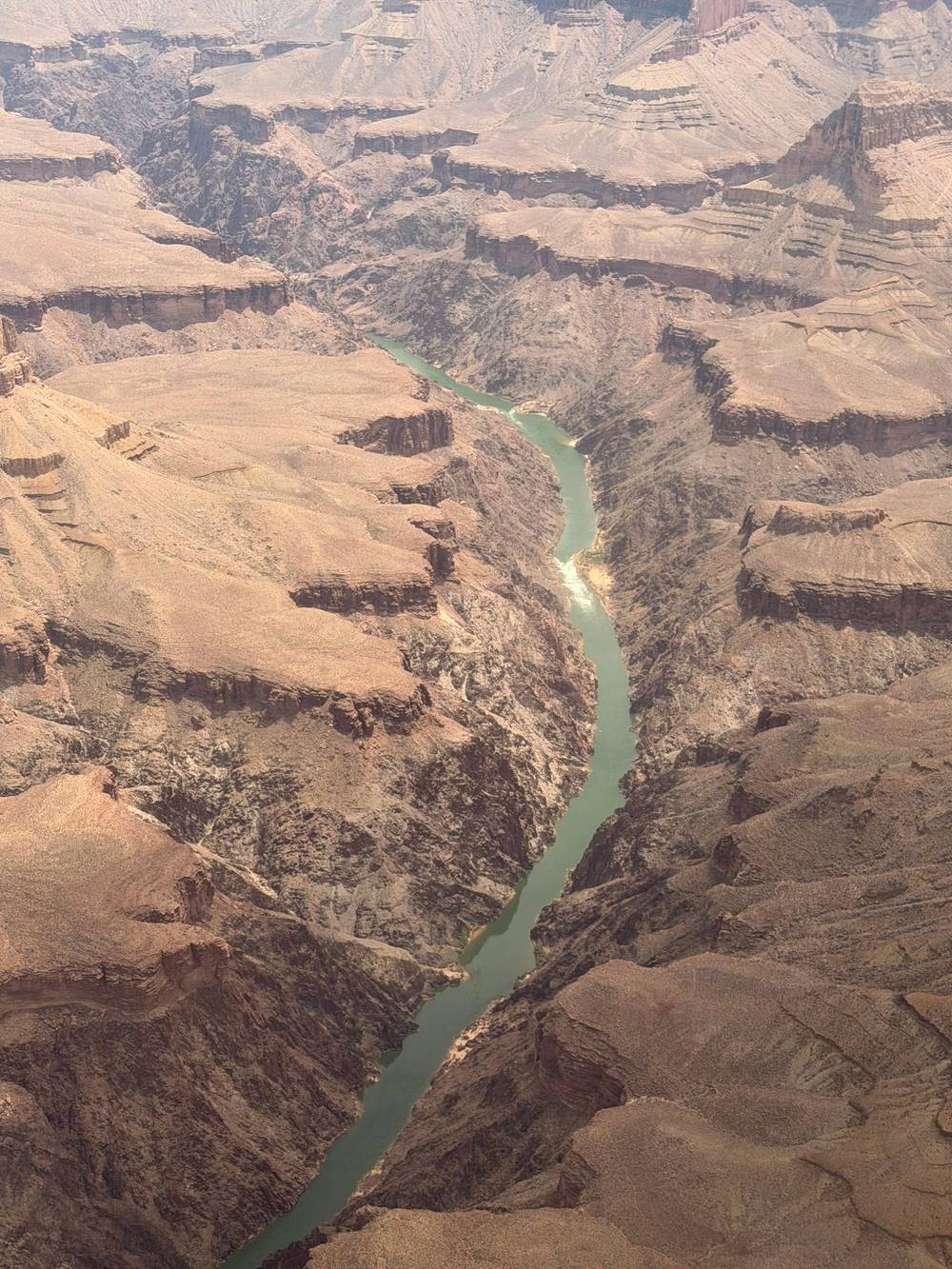
The Stinclair's on YouTube · Video data is requested only when you tap play.
Review all age and weight restrictions before booking.
What to wear on a helicopter tour of the Grand Canyon starts with where you board. The South Rim sits at 7,000 feet, or 2,135 m, above sea level, and the park gives its elevation that way on its safety page.19 The climate station near the village, at 2,068 m, records January averages of 7.4 °C for the daily high and -7.5 °C for the daily low, so a winter morning at the terminal is cold even when the sky is clear.4
Summer is milder at the rim and extreme in the depths. The park says South Rim summer highs are generally in the 80s F, and that the river far below the rim, near Phantom Ranch, typically passes 100 degrees.7,8 July at the village station averages a high of 30.4 °C and a low of 10.4 °C.4 The helicopter cabin is not the canyon floor, so dress for the rim and add a layer for the cabin air and the wind at the helipad.
The park gives plain advice for the shoulder seasons and winter. Spring and fall weather is extremely unpredictable, and winter weather can change suddenly, so layered clothing for cold, rain, wind and snow is the rule.6,1 In winter wind chill at the South Rim can at times drop below 0 degrees F.5 Add sunblock all year, because the park lists sunburn and dehydration among the risks at this elevation.2
Grand Canyon West suggests a camera, comfortable clothing and sturdy shoes for its visitors.10 Flat, closed shoes are also the sensible choice for a helipad and for the short walk on gravel or pavement that follows. Landing tours add a stroll on a canyon plateau, so shoes with a grip are better than sandals.
Keep loose items close. A hat that can blow away should stay in the bag until you are on the ground, and a scarf should be tucked in so it cannot flap near the door. A phone on a wrist strap or a camera on a neck strap is safer than a phone in a loose hand. These are ordinary precautions, not rules, and the pilot or the ground crew will tell you what applies to the aircraft you fly in.
Bags are also part of the weight and balance sum. Ask whether large bags can stay at the terminal, and pack the morning's extras in a small daypack you can leave behind if they cannot. If you book a Las Vegas landing flight, remember that the self-drive check-in is 45 minutes before departure, which is a good moment to sort the bag.
FAQ
The line for an extra seat is 275 lbs on the 45-minute South Rim flight, 300 lbs on the home listing and 250 lbs on a West Rim tour.
On the home listing the extra seat is settled with the operator on the tour day.
Babies under 2 ride free on the home listing, with proof of age, on a parent's lap.
Anyone aged 16 or younger must travel with an adult on the home listing.
On the South Rim flights seats follow balance limits, and a party may be seated apart.
Passengers 18 and older bring a government-issued photo ID on the 45-minute South Rim flight.
Sources
Planning a flight over the Grand Canyon? Ask a real person here.